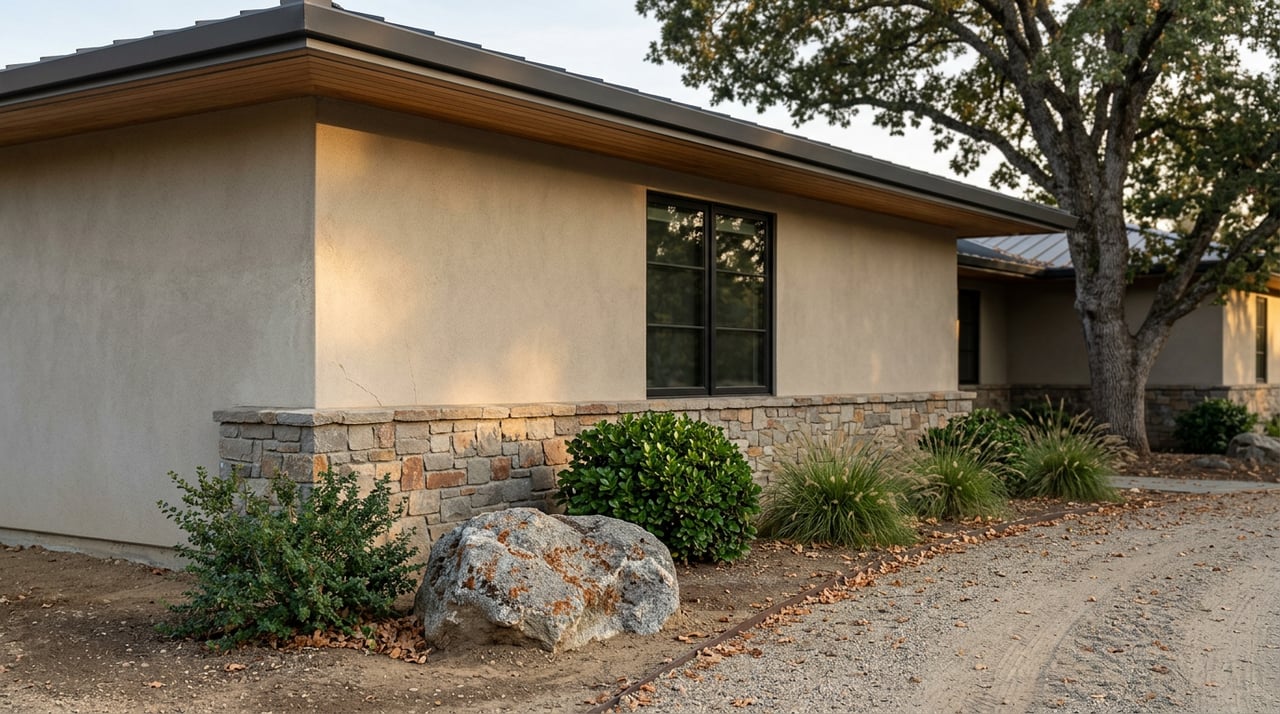
"There's very little in the way of government services here and not a single road was put in using government funds."
That's how a retired Kern County Fire Department battalion chief described Hart Flat to the Desert News a few years back. He wasn't complaining. Longtime residents talk about the area's independence the way people talk about a favorite feature of the house: proudly, and a little possessively.
Buyers hear "no HOA, no CSD" and picture savings. No monthly assessment, no board meetings, no committee reviewing your fence color. What that framing misses is where the paperwork goes instead. In a district-governed neighborhood, a phone call gets you a will-serve letter, a rate schedule, or a maintenance record. In Hart Flat, that same information exists, but it lives in a shareholder ledger, a filing cabinet, or an understanding between neighbors that's never been written down. The freedom is real. So is the homework.
Three systems, no office to call
Every neighborhood needs roads, water, and a way to handle wastewater. In Bear Valley Springs or Stallion Springs, a Community Services District runs all three and keeps records a title company can request directly. Hart Flat runs on a different model entirely.
- Roads were built and are maintained by the people who use them, not the county.
- Water comes from a mutual water company drawing on a shared system of wells and springs, not a metered utility account.
- Wastewater goes to a private septic system, sized and sited by a soil test the buyer arranges, not a public sewer line.
None of that makes Hart Flat harder to love. It makes it harder to close on without knowing exactly what to ask for.
Water shares in Hart Flat
Land and homes in Hart Flat sometimes list with a water share. That structure is common to mutual water companies across rural California. These are private nonprofit corporations that serve areas with no alternative supply.
Roads nobody's government built
The battalion chief's point about roads isn't folklore. Hart Flat and the surrounding Keene area sit outside any road maintenance district, so buyers should ask how access and road maintenance are handled.
For a buyer, the questions are less romantic than the setting. Is there a written agreement covering who pays for grading and repair, or has maintenance always been handled informally among neighbors who just take care of it? Does the recorded easement match the road as it sits on the ground, or has the driveway drifted from the paper description over the years? A verbal understanding among neighbors who've lived there for decades works fine until one of them sells and the new owner has never heard of it.
Granite doesn't negotiate
Septic is where Hart Flat's geology adds its own wrinkle. As we've noted when discussing raw land purchases in Tehachapi, the mountain terrain here is largely fractured granite and complex rock formations under a thin layer of topsoil, a very different profile from the deep, uniform soil on a valley floor. One lot can perc cleanly while a parcel a hundred feet away sits on solid rock and needs a fully engineered alternative system that can add tens of thousands of dollars to a build.
Kern County requires at least two percolation test holes for any septic system, with a minimum of three individual tests run in each hole, all located within 35 feet of the proposed leach field. That's not a formality you can wave away by pointing to a neighbor's working system as a reference. Every parcel earns its own result, and on ground this uneven, the parcel next door tells you very little about your own.
What a CSD hands you versus what Hart Flat expects you to find
| Question a buyer asks | CSD-governed neighborhood | Hart Flat |
|---|---|---|
| Who confirms water is available to this parcel? | The district issues a will-serve letter on request | The mutual water company's shareholder ledger and a flow test you arrange |
| Who maintains the road? | The district's road crew, funded by assessments | The property owners along that stretch |
| Who proves the septic will work? | Public sewer connection | A licensed tester, per parcel, following Kern County's percolation standards |
The escrow checklist nobody hands you
Before you remove contingencies on a Hart Flat property, get these in hand:
- The recorded road maintenance agreement, or written confirmation that none exists, so you know exactly what you're inheriting.
- Written information from the mutual water company about any water share associated with the property and its status.
- A current well flow and water quality test, not just the seller's word that the well has "always been fine."
- A passing perc test or, if a system is already installed, the original permit and any repair history on file with Kern County Environmental Health.
None of these documents show up automatically. Someone has to ask for each one by name.
If you're weighing a purchase in Hart Flat, Theresa Mann & Co has spent decades sorting through exactly this kind of paperwork on Kern County's rural parcels, from water shares to perc tests to the private agreements that keep a mountain road passable. Book a consultation and let's find out what your specific parcel actually requires before you write an offer.
This article is general information, not legal, tax or financial advice. Consult a qualified professional about your situation.