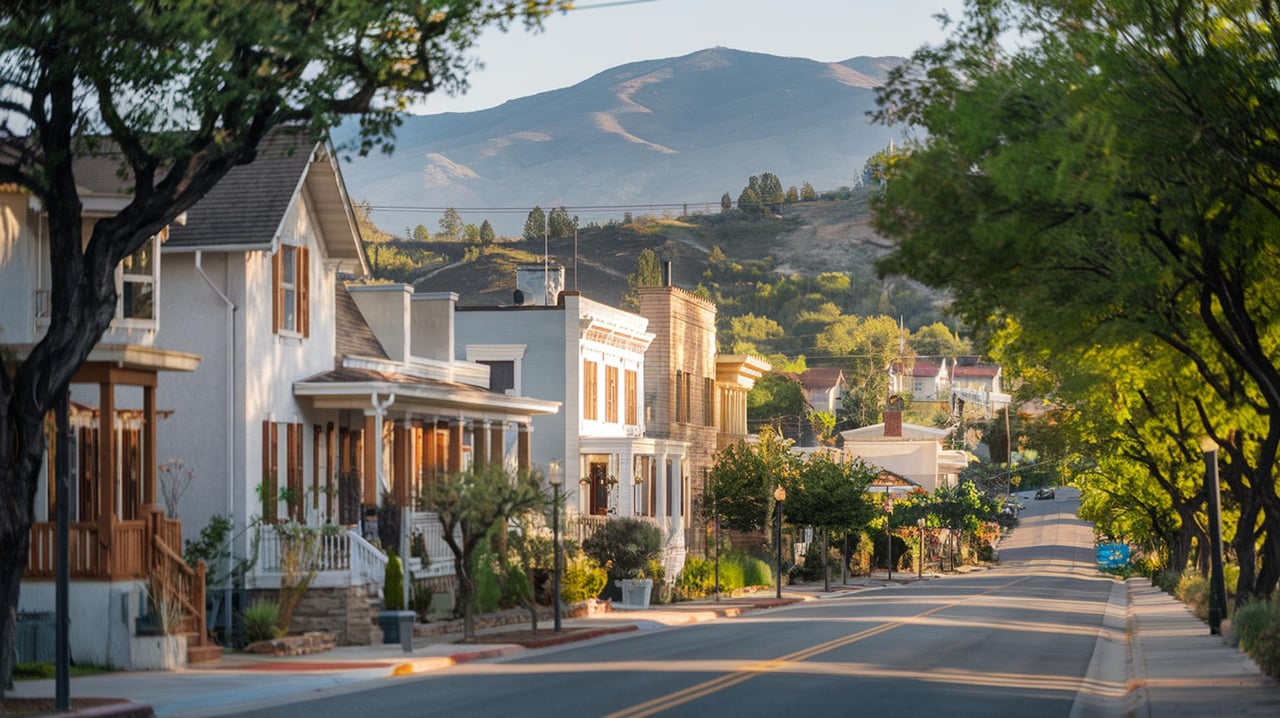
Downtown Tehachapi is the historic, walkable heart of the Tehachapi Valley, a Main Street district between the San Joaquin Valley and the Mojave Desert. Buyers come here for four real seasons, a close community, and prices well below coastal California. The town's railroad roots still show in its storefronts and older homes. Buying downtown is different from buying in the gated and acreage communities around it. The housing stock is older, the financing options are broader than many buyers expect, and the ownership costs depend on elevation and weather as much as price. This guide covers what you need to know before you make an offer.
Why Buyers Choose Downtown Tehachapi
The Kawaiisu people first lived in this area and called it Tihachipia, meaning "hard climb." The first modern settlement, now called Old Town, grew up in the 1860s to serve miners and travelers. The town moved to its present downtown location in 1876, when the Southern Pacific Railroad arrived, and Tehachapi incorporated in 1909. That railroad identity still defines Downtown Tehachapi, from the rebuilt depot at its center to the brick facades along Tehachapi Boulevard.
Downtown sits at about 3,970 feet. Summer nights are cool, autumn brings changing leaves, and winter brings occasional snow, which is rare for Southern California. The City of Tehachapi has roughly 11,400 residents. It still has the grocery stores, medical services, and Highway 58 access that make daily life practical. Bakersfield is about 45 miles west.
The Downtown Tehachapi Housing Market Today
Downtown is part of the 93561 zip code. Median listing prices there are currently around $468,000 to $472,000. Citywide median sold prices range from about $424,000 to $460,000, which reflects normal negotiation from list price. Homes sell at roughly 99% to 100% of asking. Most listings stay on the market 30 to 60 days, depending on price and condition. Well-priced homes under $450,000 often go pending in less than 25 days. For a broader view of valley-wide conditions, see what Tehachapi homebuyers should know about the market.
Inventory is fairly balanced. Buyers have real choices and rarely face the bidding wars common in coastal markets, and values have been growing steadily in the single digits year over year. Homes that are updated and priced correctly still move quickly, so buyers should be ready to act when the right one appears.
What Kinds of Homes You'll Find Downtown
Downtown's housing falls into three broad eras.
Railroad-era homes (1870s–1920s). These are Craftsman bungalows, Folk Victorians, and simple railroad cottages. They typically have front porches, original hardwood floors, wood siding, steep roofs built for snow, and tree-lined lots of about 0.15 to 0.25 acres. The Errea House is one of the oldest homes in town. It was built in Old Town in the 1870s and rolled to its downtown site on logs around 1900, and it now operates as a museum on South Green Street. Homes from this era offer the most character and the best walkability, but they usually need the most system updates.
Mid-century ranch homes (1950s–1980s). These are single-story California Ranch and Minimal Traditional homes. They tend to have practical floor plans, attached garages, brick or stone fireplaces, and slightly larger lots of 0.20 to 0.40 acres. First-time buyers, retirees, and investors like them for single-level living at an approachable price.
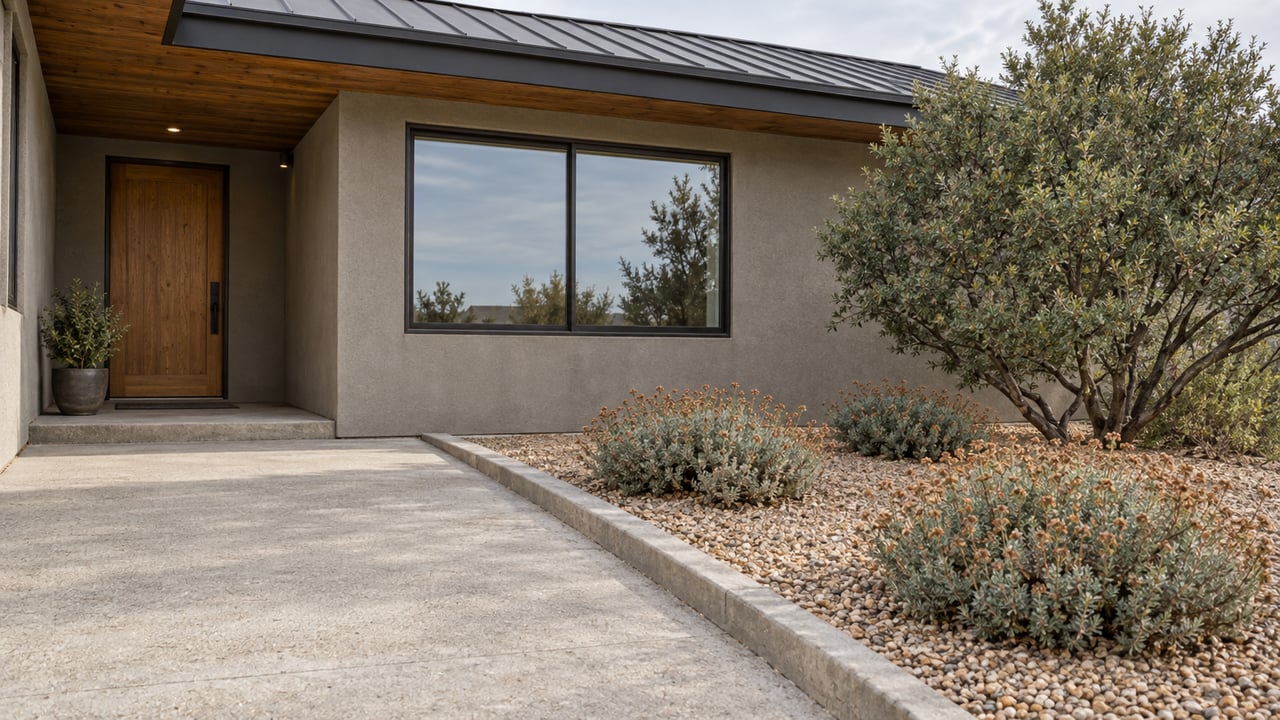
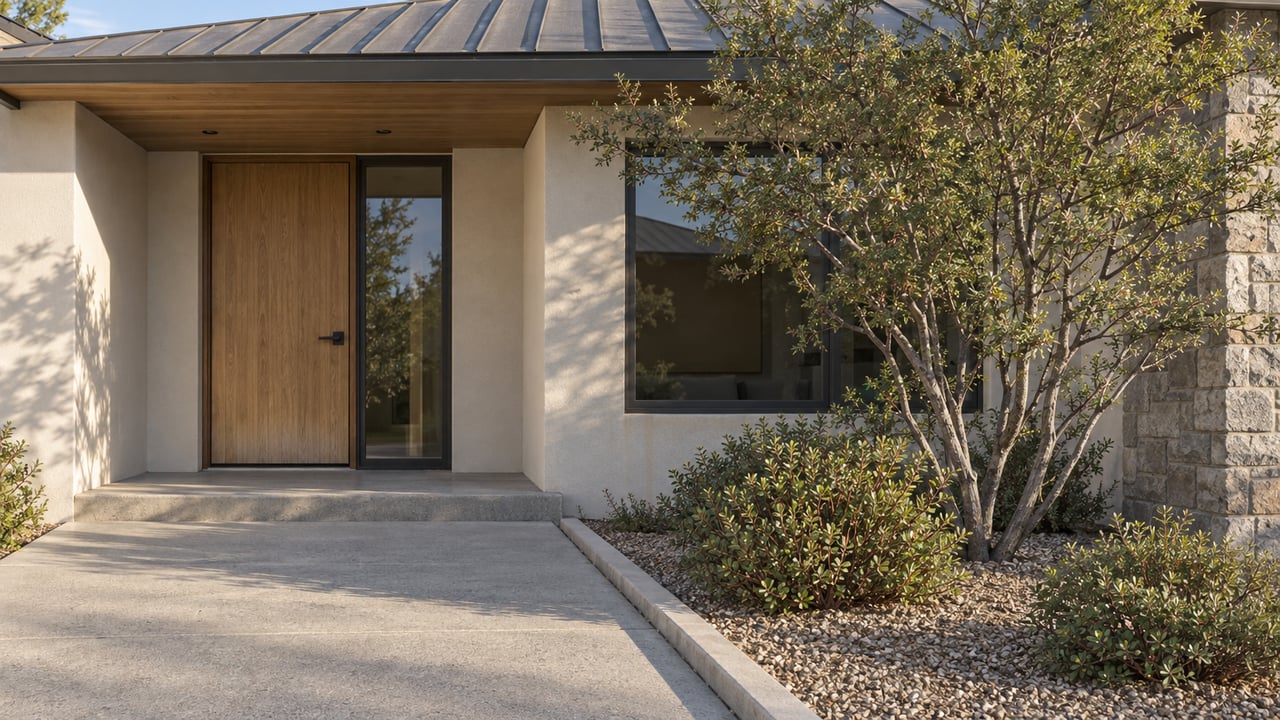
Modern infill (2010s–present). New homes occasionally go up on individual vacant downtown lots, in styles like modern farmhouse, contemporary Craftsman, and Spanish Revival. Buyers get dual-pane windows, better insulation, solar, and lower energy bills, at a higher price per square foot. Large master-planned developments are farther out.
Buyers weighing a downtown home as an investment should also read whether a downtown Tehachapi property fits a rental plan. Buyers interested in mixed-use property should know that buying a downtown storefront means buying the building and the business as two different deals.
Mortgage Loans and Financing Options for Downtown Tehachapi Buyers
Downtown median prices sit well below Kern County's loan limits, so most buyers qualify under standard programs. The 2026 conforming loan limit for a single-family home in Kern County is $832,750. Conventional loans need as little as 3% down for first-time buyers and 5% for repeat buyers. The FHA limit is $541,287. FHA loans require 3.5% down with a minimum 580 credit score, which makes them a common choice for buyers purchasing older homes that need work.
Many buyers overlook USDA Rural Development financing. Much of the Tehachapi Valley meets USDA population and geography criteria, which allows 0% down for households within Kern County's income limits. Eligibility is set by address, so check the specific property on the USDA eligibility map before counting on it. Our guide to USDA loans around Tehachapi explains who qualifies and how the process works.
Veterans and active-duty service members can buy with 0% down and no private mortgage insurance through a VA loan. Borrowers with full entitlement also have no loan limit. That matters here because Edwards Air Force Base is roughly 40 to 50 minutes east and the Mojave Air and Space Port is about 20 minutes away. Many military, aerospace, and defense workers choose Tehachapi for its cooler mountain climate.
First-time buyers should also look at CalHFA's MyHome Assistance Program. It offers a deferred-payment junior loan of 3.5% of the price on FHA loans or 3% on conventional loans, which can go toward the down payment and closing costs. CalHFA's Dream For All shared-appreciation program offers up to 20% down payment assistance in exchange for a share of future appreciation. It opens only periodically when state funding becomes available.
Here's how the main options compare on a $450,000 purchase:
Loan Type | Minimum Down | Down Payment | Mortgage Insurance / Fees | Best Fit |
|---|---|---|---|---|
Conventional | 3% | $13,500 | Monthly PMI, cancels at 20% equity | Credit scores of 680 and up |
FHA | 3.5% | $15,750 | 1.75% upfront MIP plus monthly MIP | Credit scores of 580 to 670 |
USDA | 0% | $0 | 1% upfront guarantee fee plus monthly fee | Eligible addresses within income limits |
VA | 0% | $0 | Variable funding fee, no monthly PMI | Veterans, active duty, and eligible spouses |
Older homes don't always appraise at the contract price, especially when a comparable sale is hard to find. Buyers stretching their budget should understand how appraisal gaps are handled in Tehachapi before writing an offer.
Costs Beyond the Purchase Price
Kern County property taxes start at California's 1% Proposition 13 base rate. Voter-approved school, hospital, and water bonds bring the effective rate to roughly 1.15% to 1.35% of assessed value. After closing, expect a one-time supplemental tax bill. It covers the difference between the seller's old assessed value and your purchase price, prorated from your close of escrow through June 30. Budget for it early so it doesn't come as a surprise.
Insurance is where downtown has an advantage. Homes in the core with clear defensible space usually qualify for standard carriers at roughly $1,500 to $2,800 a year. Homes near brush or open terrain, which is more common in outlying foothill areas, may be declined by standard carriers. Those owners end up pairing a California FAIR Plan policy with a Difference in Conditions policy, which can cost $3,500 to $6,000 or more a year. Get insurance quotes during your contingency period, not after.
Downtown homes pay the City of Tehachapi for water and sewer, typically $80 to $150 a month depending on summer irrigation, and about $35 a month for trash and recycling. Southern California Edison provides electricity and SoCalGas provides natural gas. At this elevation, winter heating bills of $150 to $300 or more a month are normal. On a $450,000 home, taxes, insurance, utilities, and energy together typically add about $934 to $1,154 a month on top of your mortgage payment.
What to Watch for in Older Downtown Homes
A fresh coat of paint or new countertops can hide a lot in a century-old house. Downtown's older homes have four common issues. They also face stresses that newer homes in milder climates don't, including snow loads, freeze-thaw cycles, and earthquakes.
Electrical. Homes built before the 1940s may still have knob-and-tube wiring. Many California insurers won't cover it or will require it to be replaced before closing. When touring, look at the main panel. Screw-in fuses or a 60-amp service is a red flag, and 200-amp service is the modern standard. A full rewire typically runs $8,000 to $18,000.
Sewer lines. Original sewer lines are usually clay or cast iron. They crack with ground movement and get invaded by roots from mature trees. Replacing a failed line can cost $4,000 to $12,000 or more. A sewer scope, where a camera is run through the line, costs a few hundred dollars and is one of the most valuable inspections you can order downtown.
Foundations. Older homes often sit on raised cripple-wall or unreinforced masonry foundations. Tehachapi is near the Garlock Fault Zone. The 1952 Kern County earthquake, a magnitude 7.3 event, knocked unbolted homes off their foundations across the valley. Check the crawl space for anchor bolts and plywood-braced cripple walls. Seismic bolting typically costs $3,000 to $8,000.
Roofs and heating. Rafters built from 2x4 lumber can sag under years of snow, and ice damming rots fascia and eaves. Look for wavy rooflines, ceiling stains, and weak attic insulation; R-38 or higher is recommended. Old floor furnaces and gravity heaters are inefficient and can be unsafe. Tehachapi's microclimates also affect how much wind and snow a particular block gets.
Disclosures and Inspections
California requires sellers to complete a Transfer Disclosure Statement covering known defects, unpermitted work, and other material issues. Downtown buyers should read it closely for any history of frozen pipes, roof leaks during snowmelt, wood-stove compliance, and past earthquake damage. The Natural Hazard Disclosure report flags fire hazard severity zones, seismic zones, and flood zones. Core downtown is typically in FEMA Zone X, a lower-risk flood zone. Homes built before 1978 also require a lead-based paint disclosure.
California contingency periods typically run 10 to 17 days. Within that window, order a general home inspection ($450–$650), a sewer scope ($250–$400), a termite and pest inspection ($100–$200), a Level 2 chimney inspection if the home has a fireplace or wood stove ($200–$350), and a roof inspection ($150–$300). Our breakdown of real estate contingencies in Tehachapi explains how to use that window well. Reviewing the preliminary title report early will surface any easements or liens.
Unpermitted additions and converted garages are common in older downtown neighborhoods. Lenders won't count unpermitted square footage in the appraisal, and it can complicate insurance and resale. Homes inside city limits fall under the City of Tehachapi Building and Safety Department, where you can request the permit history. Properties just outside the city are handled by Kern County.
Downtown vs. Outlying Tehachapi Communities
Downtown is inside city limits, so homes there are fully connected to city water, sewer, and trash service. There is no HOA, and shops, schools, and Highway 58 are all minutes away. The communities around it offer more land and privacy in exchange for longer drives and different infrastructure. Many buyers tour both before deciding. The greater Tehachapi area guide covers the whole valley.
Bear Valley Springs is a private gated community about 10 to 12 miles west of downtown. Its 2026 association assessment is $2,236 a year. The fee covers 24-hour security gates, a golf course, an equestrian center with more than 50 miles of trails, lakes, and a country club. Lots range from one acre to more than 20, and many homes combine community water with private septic systems. Stallion Springs, about 14 miles west, is run by a Community Services District rather than a gated HOA, and offers larger lots, open views, and lower community fees. For a direct comparison, see Bear Valley Springs vs. Stallion Springs for homebuyers.
Rural areas like Cummings Valley, Golden Hills, and Alpine Forest often rely on private wells and septic systems, which add their own inspections and costs. Buyers considering those areas should review what well and septic reports should show. Downtown buyers skip all of that.
Living Downtown: Walkability, Commutes, and Community
Downtown life centers on Tehachapi Boulevard, Green Street, and Robinson Street. The sidewalks are wide and traffic is slow, so errands and dinner out rarely require a car. The Tehachapi Depot Railroad Museum sits at the center of town in a reconstruction of the 1904 Southern Pacific depot, and freight trains still pass right by it. Within a few minutes' walk are Centennial Plaza, the Tehachapi Museum and Errea House, the restored BeeKay Theatre, and Philip Marx Central Park with its playground and gazebo. The Tehachapi Branch Library is on South Green Street.
Local businesses anchor downtown. Kohnen's Country Bakery is known for its German breads and pastries, Red House BBQ and Petra Mediterranean Delicatessen are local favorites, and there are tasting rooms and taprooms along with antique shops and galleries. Murals on the brick buildings depict Kawaiisu heritage, the valley's farming history, and the railroad. Living in Downtown Tehachapi covers everyday life here, and downtown's food, wine, and weekend scene covers where locals go.
The community calendar follows the seasons. The Thursday evening farmers market runs June through August along South Green Street and Centennial Plaza. The Tehachapi Mountain Festival, held each August for more than 60 years, brings a parade, rodeo, arts and crafts, and a street concert to downtown. When it ends, downtown settles into what residents call the locals' season. The fall Apple Harvest Festival celebrates the valley's orchards, and in December the Hometown Christmas tree lighting takes place in Centennial Plaza. Downtown is served by Tehachapi Unified School District, whose offices are on South Robinson Street.
Commuting depends on Highway 58. Bakersfield is 40 to 50 minutes west, Mojave about 20 minutes east, Edwards Air Force Base 40 to 50 minutes, and Lancaster 55 to 70 minutes via Highway 14. Winter adds some uncertainty. Snow and black ice can trigger CHP-escorted traffic, chain controls, and occasional full closures over the pass. Closures typically happen a few times each winter and last from a few hours to a full day, and detours are long. Buyers with flexible schedules or remote work setups handle those days most easily.
Working With a Local Expert: Theresa Mann
Downtown's older homes, varied financing options, and weather-driven ownership costs are easier to navigate with an agent who knows the town firsthand. Theresa Mann has lived in Tehachapi for more than 40 years and has 25 years of real estate experience with Keller Williams. Local residents have voted her Tehachapi's "Best & Favorite" Realtor six years running. She was Keller Williams' #1 agent in total sales volume, GCI, and unit count in 2021, 2022, and 2023.
Theresa can point out which blocks see the most wind and which older homes have been properly updated. She can also help you choose the loan program that fits both you and the property. Her work covers downtown and the surrounding communities, from Bear Valley Springs and Stallion Springs to Hart Flat and Cummings Valley, so she can help you compare areas as well as homes. You can browse current listings, search all Tehachapi homes, or read what past clients say about working with her.
Reach Theresa at (661) 205-4088 or [email protected], or learn more about her background.